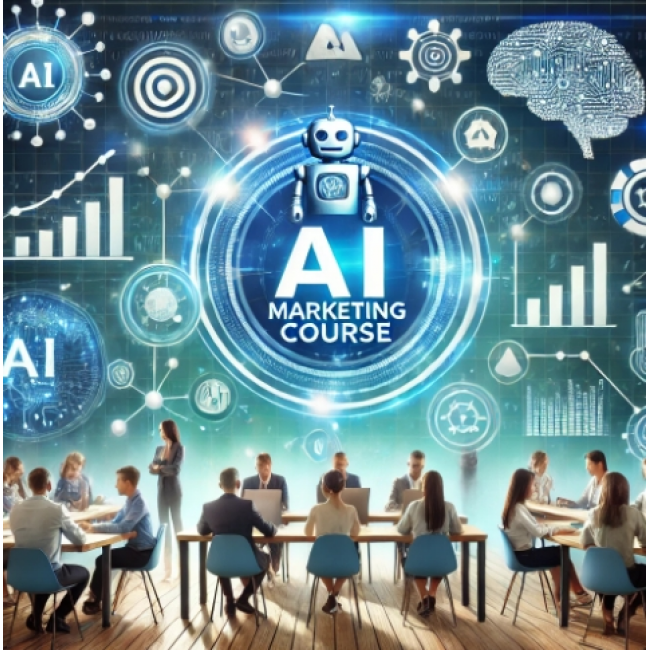
AIMarketing Application Course The content arrangement from newcomer to professional includes basic, advanced, applied and professional learning paths, supplemented by practical projects, case analysis and the latest technology trends.
⭕AI Marketing Application CourseThe design should focus on how to use artificial intelligence technology to improve the efficiency and effectiveness of marketing strategies. The course should cover AI’s core technologies, marketing scenario applications, and practical cases to help students apply AI technology in actual business. The following is a detailed course plan:
⭕Module 1: Basic application of AI in marketing
Target: Understand how AI changes the marketing field, and master the basic knowledge and application scenarios of AI.
The combination of AI overview and marketing
How AI helps marketing: improve efficiency, optimize user experience, and target accurately
Main application scenarios of AI marketing: customer segmentation, personalized recommendations, automated marketing
The foundation of data-driven marketing
Data collection and processing: user behavior data, social data, transaction data
Data analysis tools and platforms: Google Analytics, Tableau
Introduction to AI tools
Natural Language Processing (NLP): Content Generation and Sentiment Analysis
Machine Learning Basics: Application of Predictive Models in Marketing
Basic concepts of chatbots and automated customer service systems
⭕Module 2: Practical techniques for AI marketing
Target:Learn and apply AI technology to solve specific marketing needs.
Customer segmentation and target audience identification
Use machine learning (K-Means, hierarchical clustering) for user segmentation
Predict user behavior models (such as churn prediction, conversion rate prediction)
Personalized recommendation system
Content-based recommendations and collaborative filtering recommendations
How e-commerce platforms use recommendation systems to increase sales
A/B testing and evaluation of recommendation effects
AI Applications for Social Media Marketing
Social data analysis: sentiment analysis, hot topic tracking
Automatically generate marketing content (such as copywriting generation tool: ChatGPT)
Algorithm optimization strategies for short video platforms (such as TikTok, YouTube)
Dynamic advertising and ad delivery optimization
Using AI for advertising copywriting and creative optimization
Automation of advertising bidding strategies (ad serving based on reinforcement learning)
Advertising performance tracking and optimization
⭕Module 3: Advanced AI Marketing Application
Target: Explore advanced AI applications in marketing and implement them in actual scenarios.
Marketing Automation
Automated design and operation of email marketing
Chatbot integrated with CRM system for 24/7 service
Voice and image generation technology
Application of voice interaction technology in marketing (voice assistant and voice search)
Image generation (such as DALL·E) is used in social media and brand visual design
Predictive Marketing and Analytics
Predict user needs (based on time series data)
Dynamic pricing strategy (how AI adjusts product prices to maximize revenue)
Using AI for market trend analysis
Marketing Ethics and Data Privacy
Transparency and bias issues in AI marketing
The impact of privacy protection regulations such as GDPR
⭕Module 4: Practice and Case Analysis
Target: Apply the learned knowledge to actual cases and projects.
case study
Analysis of AI marketing strategies of successful companies (such as Amazon, Netflix, Google)
How AI can help small and medium-sized businesses achieve rapid growth
Project implementation
Design a marketing automation solution (e.g. email promotion strategy)
Develop a simple recommendation system or user segmentation model
Results display and feedback
Students share completed AI marketing plans
Expert assessment and optimization suggestions
⭕Module 5: The future development direction of AI marketing
Target: Understand industry trends and learn how to stay competitive in a rapidly changing environment.
AI and Metaverse Marketing
Application of virtual reality and augmented reality in marketing
Brand marketing cases in the metaverse
The promise of generative AI
Further developments in copywriting, video and image generation technology
How to use generative AI to create marketing growth points
The combination of AI marketing and human creativity
How AI can assist creativity rather than replace creative work
The future of artificial intelligence and teamwork
⭕Course Features
Actual combat drive: Emphasis on applying what you learn and mastering technology through cases and projects.
Industry experts share: Invite well-known marketing experts and AI technicians to share practical experience.
Continuous learning resources: Provide resources and tools for further learning (such as AI toolkits, marketing data sets).
This course is suitable for marketing professionals, digital marketing managers and people interested in marketing technology to help them master AI technology, improve business performance and create more value.
Tags: AIMarketing Application Course The content arrangement from newcomer to professional includes basic, advanced, applied and professional learning paths, supplemented by practical projects, case analysis and the latest technology trends., AIMarketing application course website store opening, ❤️Knowledge course sharing